
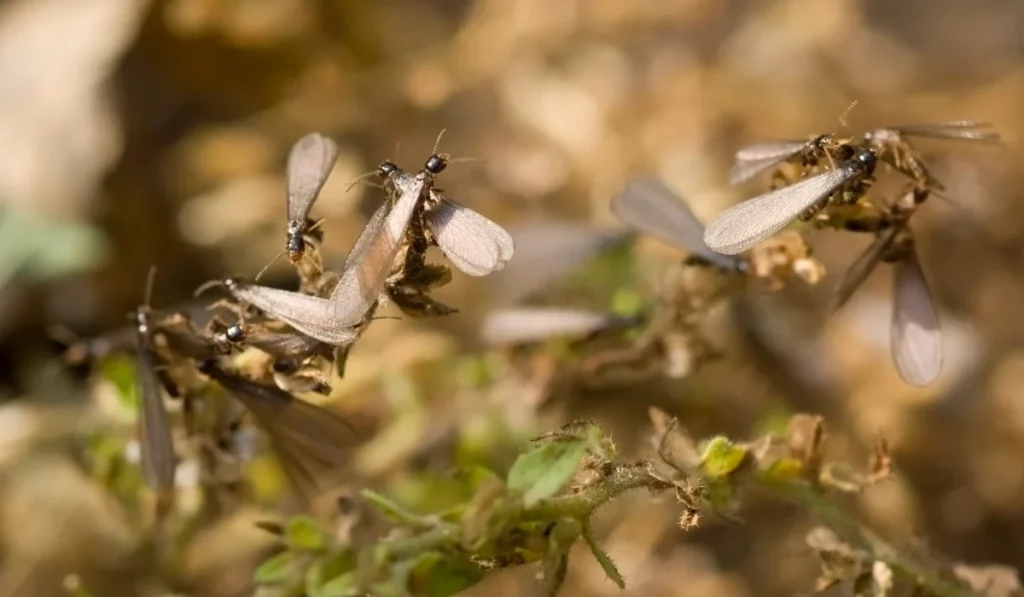
Seeing flying termites around your home can be unsettling. These winged insects often appear suddenly near windows, lights, or doors, especially during warm months in Ohio. When they show up, many homeowners worry about hidden damage or a growing termite infestation.
Flying termites are reproductive members of a termite colony. These insects, called swarmers or alates, leave an established colony during a termite swarm to start new colonies. In Columbus and across Ohio, swarming termites often appear in spring or early summer as temperatures rise and moisture levels increase.
Spotting flying termites does not always mean severe termite damage has already occurred. It does signal that termite activity may be nearby. Acting quickly helps prevent structural damage and keeps a termite colony from spreading through wooden structures in your home or commercial building.
Understanding what flying termites mean, how to identify them, and what steps to take next helps homeowners respond with confidence and protect their property.
Key Takeaways
- Flying termites are reproductive swarmers from an existing termite colony looking to start new colonies.
- Termite swarm season in Ohio usually occurs during warm Summer days or after rainfall.
- Flying termites are often confused with flying ants, but wing size, antenna shape, and body structure help you tell them apart.
- Avoid quick DIY solutions that disturb termite colonies without solving the problem.
- A termite inspection from a pest control professional confirms termite activity and guides termite treatment.
Saw Flying Termites? What It Usually Means
When you notice flying termites, the insects you see are usually swarmers. These termite swarmers are the reproductive members of a mature termite colony preparing to expand.
A Nearby Termite Colony Is Established
A termite swarm often indicates that a termite colony already exists close to your property. Subterranean termites are the most common type of termites in Ohio. They live underground and travel through mud tubes to reach food sources.
These termites feed on cellulose found in wood, drywall, cardboard, and other construction materials. If a colony is feeding on wooden structures near your home, swarmers may appear inside living spaces or near your foundation.
Mud tubes along the foundation, crawl space walls, or in basement areas are among the most recognizable signs of termites. These small tunnels protect termites as they move between soil and wood.
Termites Are Starting New Colonies
During swarm season, termite swarmers leave their termite colony in large groups. These winged termites fly briefly before landing and shedding their wings.
Once on the ground, the swarmers pair off and search for a new food source. Areas with damp wood, mulch beds, or wooden debris near the home can attract them.
If they find suitable conditions, they begin forming new colonies inside wooden structures, wall voids, or soil near the property.
It Could Be an Early Warning Sign
Flying termites can be one of the earliest visible signs of termites. Many termite infestations stay hidden because termites feed inside wood where damage is not immediately visible.
You might also notice discarded wings on windowsills, small mud tubes along the foundation, or minor areas of damaged wood.
Catching termite activity early helps limit termite damage and prevent the infestation from spreading further into the building’s structural areas.
Quick Check: Flying Termites or Flying Ants
Many homeowners confuse flying termites with flying ants. Both insects appear during warmer times of the year and may gather near lights or windows.
Looking closely at physical features helps you identify which insect you are seeing.
Antennae Shape
Flying termites have straight antennae that extend forward from the head. These antennae appear bead-like and uniform in shape.
Flying ants, including carpenter ants, have bent or elbowed antennae. If the antennae clearly bend outward, the insect is more likely an ant.
Wing Size and Shape
Winged termites have two pairs of wings that are the same size. Their hind wings match the length of their front wings.
Flying ants look different. Their front wings are longer than their hind wings. If you find equal-length wings near windowsills or doors, they likely belong to termite swarmers.
Body Color and Shape
Termites usually appear light brown or dark brown with a straight waist between body segments. Their bodies appear more uniform from head to abdomen.
Carpenter ants have a narrow waist and a segmented body shape. Their color is often darker and shinier than that of termites.
Recognizing these differences helps homeowners quickly determine whether the flying insects are termites or ants.
What to Do Next (Today)
If you see flying termites or suspect a termite swarm near your home, taking a few immediate steps can help limit the risk.
Take Photos or Collect a Sample
Take clear photos of the insects you found. If possible, collect a few in a sealed container.
A pest control professional can examine the insects to determine whether they are termites, flying ants, or another type of flying insect.
Check for Visible Signs
Look around your property for other signs of termites. Pay attention to windowsills, basement walls, crawl spaces, and foundation areas.
Common indicators include mud tubes, piles of discarded wings, or small sections of damaged wood. Termites are also attracted to damp wood, so inspect areas with high moisture levels.
Schedule a Professional Inspection
If flying termites appear around your home, a termite inspection is the most reliable next step.
A pest control expert will inspect areas where termites commonly hide. This includes crawl spaces, structural wood, foundation edges, and landscaping features such as mulch beds.
What Not to Do While You Wait
While waiting for a pest control professional to inspect your home, certain actions can make termite problems harder to manage.
Avoid Disturbing the Colony
Breaking open wood or spraying random products into suspected termite areas can scatter the colony.
When termites are disturbed, they often move deeper into walls or structural areas, making them harder to locate and treat.
Don’t Rely on Quick DIY Fixes
DIY termite control methods often kill only the termites you can see. They rarely eliminate the entire termite colony.
Without addressing the colony itself, termite activity can continue inside walls or underground.
Don’t Ignore the Warning Signs
A termite swarm may only last a short time. Some property owners dismiss it once the flying insects disappear.
Ignoring this event can allow termite activity to continue unnoticed. Early inspection prevents termite damage from becoming more severe.
Schedule a Termite Inspection in Ohio
If you saw flying termites around your property in Ohio, scheduling a termite inspection is a smart step toward protecting your home.
Subterranean termites often remain hidden while feeding on wooden structures. A trained pest control professional can locate mud tubes, damaged wood, and other signs of termite activity that homeowners may miss.
A professional inspection identifies the type of termite present and determines whether termite treatment is needed. Effective termite control helps stop termite activity and protects your property from structural damage.
If you suspect termite activity in Columbus or nearby Ohio communities, contact EarthRite Pest Control to schedule an inspection. Their experienced team provides reliable residential pest control and termite treatment services designed to protect homes and businesses.
Schedule your termite inspection with EarthRite Pest Control today and take the first step toward long-term termite prevention.
FAQs
Do flying termites mean I have a termite infestation?
Not always, but it can indicate a nearby termite colony. A termite swarm often happens when a colony is mature and expanding. A professional termite inspection can confirm whether termites are active in your home.
When is termite swarm season in Ohio?
Termite swarm season in Ohio typically occurs during spring and early summer. Warm temperatures and increased moisture often trigger swarming termites to leave their colonies.
How can homeowners prevent termite problems?
Termite prevention focuses on reducing moisture levels and limiting contact between wood and soil. Keeping mulch away from the foundation, fixing leaks, and scheduling regular pest control inspections can help prevent termite infestations.
